Growing Brands

Without Slowing Your Growth Rhythm — Pilot-to-Series Bridge

For growing brands, partnership that doesn't slow growth — smart cost, flexible pilot lot, and test-scale-repeat rhythm at the core.

Growing Brands
Scroll Down
Investment, Not Cost

Production Decision When Growth Accelerates

For growing brands the right manufacturing partner choice either supports growth pace or slows it; high MOQ pressure, inflexible terms and large lot mandates break momentum. The wrong partner in scaling phase creates lost investment.

Denim Moon builds growth-friendly partnership on three axes; smart cost, flexible pilot lot discipline and test-scale-repeat cycle apply together. Brand growth pace dictates partnership rhythm, not the line's tempo, and partnership stays aligned.

Cash flow alignment is inseparable from production discipline; payment schedule binds to order phasing, term flexibility adapts to growth fluctuations, reorder discount builds systemically with the scale curve. Growth doesn't slow, it gets supported.

Six Steps One Path

Smart Cost Approach

Smart Cost approach builds systematic cost intelligence for growing brands across six sequential steps; target cost, pilot budget, lot calibration, reorder discount, scale curve and cash flow sync apply together. Cost turns into investment.

Budget Frame

Target Cost

Target cost is built the moment the brief lands with the market price target; product spec, fabric category, order volume and line capacity systematically structure the budget frame. Cost target becomes the design's first parameter.

Test Investment

Pilot Budget

Pilot budget is defined with a separate scope lock for small lots; pilot production targets, test expenses and sample approval count are set in advance. Investment size stays in control, risks are systematically measured in the test setup.

Volume Match

Lot Calibration

Lot calibration is the volume-matching phase; pilot results align with the planned scale volume, optimum MOQ syncs with the brand's growth forecast. Scale transition is systematically planned together with line capacity, risk holds.

Volume Advantage

Reorder Discount

Reorder discount directly supports growth momentum across consecutive orders; as scale grows, unit cost systematically drops, per-lot discount layers bind to the supply chain. Reorder rhythm runs aligned with the brand's cash flow.

Volume Effect

Scale Curve

The scale curve makes unit cost reduction predictable per 1,000 units; line efficiency, fabric sourcing and line calibration deliver a steadily shrinking unit cost with scale growth. Curve is planned together with brand growth roadmap.

Cash Alignment

Cash Flow Sync

Cash flow sync binds payment schedule to order phasing; pilot payment, bulk down payment and shipment balance systematically adapt to the brand's sales cycle. Cash flow runs aligned with production rhythm, tension is fully prevented.

Test Step, Not Risk

Pilot Lot Discipline

Pilot lot discipline gives growing brands a test opportunity at small-scale investment; pilot MOQ definition, budget lock, test targets, approval threshold, scale decision and pilot archive structure risk management in six layers.

Pilot MOQ Definition

Pilot MOQ is defined based on the growing brand's test capacity; flexible start in the 100-300 unit range systematically calibrates with product complexity and line efficiency. Pilot scale supports test purpose, investment stays in control.

If pilot MOQ isn't defined correctly, test results stay vague or investment grows too large; the scale-test balance is reviewed for each brief.

Budget Lock

Pilot budget is locked in writing through contract addendum; production cost, test expenses and sample count are defined within a fixed scope. Budget changes during pilot follow a systematic approval path, no surprise items emerge.

Budget overruns damage pilot discipline; scope change requests bind to written approval within 48 hours and stay systematically logged in record.

Test Targets

Test targets are systematically defined on three axes before pilot starts; quality acceptance criterion (premium AQL), schedule accuracy target window, and unit cost band. Three targets evaluate at pilot end and drive scale decision.

Target ambiguity makes pilot output unreadable; three axes stay systematically logged in the written brief, verbal targets don't enter pilot start.

Approval Threshold

Approval threshold sets minimum criteria for transition from pilot end to bulk production; at least two of three targets approved plus client written approval is required. If results fall short, pilot is revised and bulk is paused.

Early bulk transition risk breaks pilot discipline; when the threshold isn't met, bulk plan is delayed by 14 days and pilot enters revision path.

Scale Decision

Scale decision is made jointly with client after the pilot-end report; bulk lot size, reorder calendar and cash flow alignment are systematically addressed together. The decision closes in one meeting with a written document, line starts.

Hasty scale decision puts pilot investment at risk; bulk lot size isn't decided at the decision meeting without clear three-axis results in hand.

Pilot Archive

Pilot archive is stored systematically in a separate digital folder for each brief; pilot brief, sample approvals, production report, test results and decision signature stay in one package. On reorder, archive reference opens cleanly.

Loss of pilot data damages reorder quality; archive access keeps audit trail, missing parts are systematically scanned in monthly internal review.

[object Object],[object Object]
Four Axes One Calendar

Cash Flow Alignment

Cash flow alignment gives the growing brand financial breathing room; order phasing, schedule flexibility, payment calendar and stock planning systematically plan together on four axes. Production schedule runs aligned with brand sales.

Order Phasing

Order goes to production in structured stages, not as one large single lot.

Schedule Flexibility

Schedule is built with flexible windows aligned to brand sales fluctuation.

Payment Calendar

Payment calendar binds to pilot, bulk and shipment phases, pressure dispersed.

Stock Planning

Stock plans according to scaling brand sales cycle, no excess load is carried.

Six Stages One Transition

Post-Pilot Production

Post-pilot production structures the transition from pilot to bulk across six sequential growth stages; pilot brief, pilot sample, pilot production, pilot evaluation, bulk move decision and reorder rhythm unite in one bridge.

Pilot Brief
01

Pilot Brief

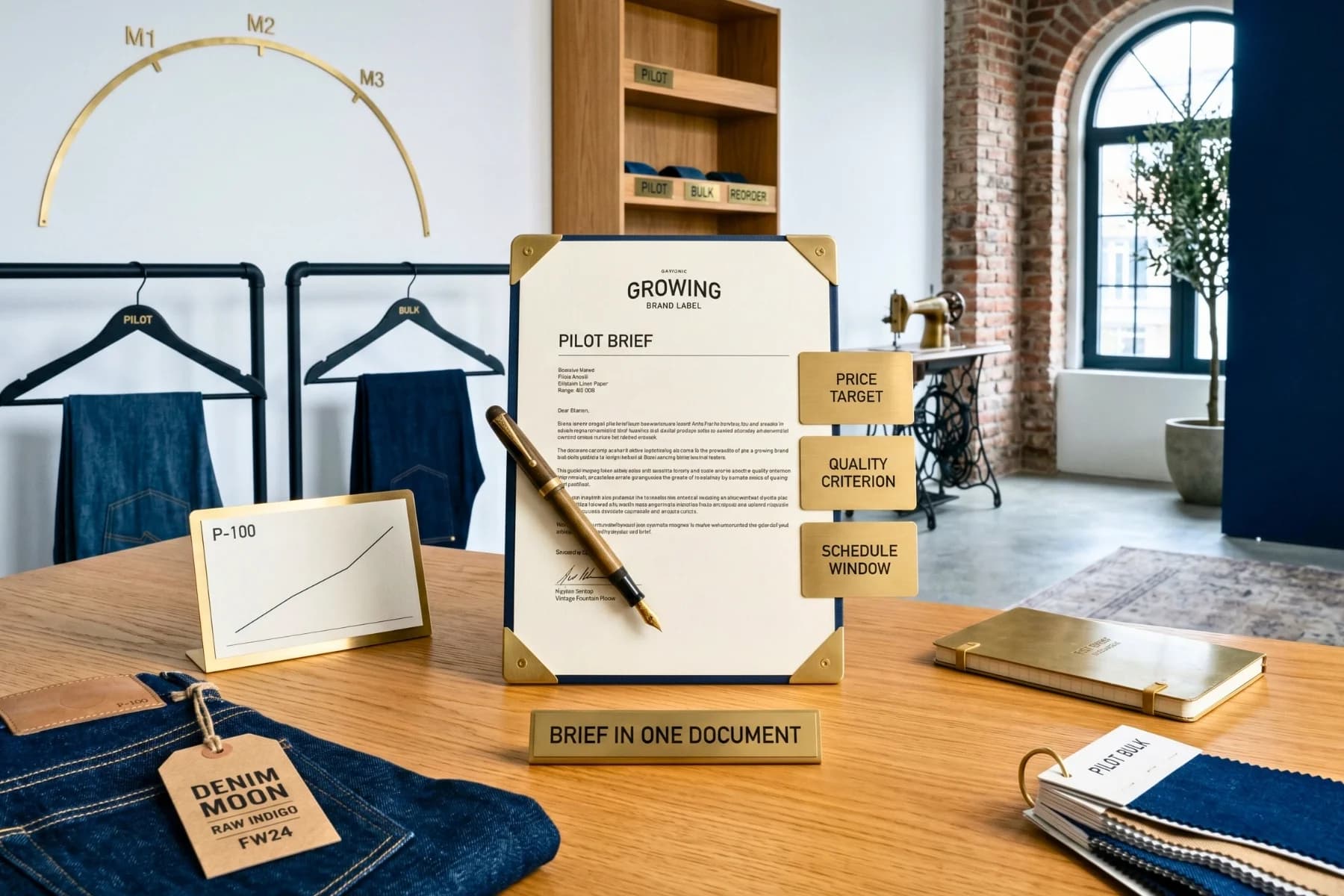
Pilot brief is taken systematically with the growing brand's test targets; market-facing price target, quality acceptance criterion and schedule window gather in one written document. Brief scope is reviewed together with the designer.

Pilot Sample
02

Pilot Sample

Pilot sample is systematically hand-made in the atelier against the brief; pattern, fabric and trim parameters calibrate to pilot scope. The sample is evaluated together with the brand on measurement and aesthetics, revisions logged.

Pilot Production
03

Pilot Production

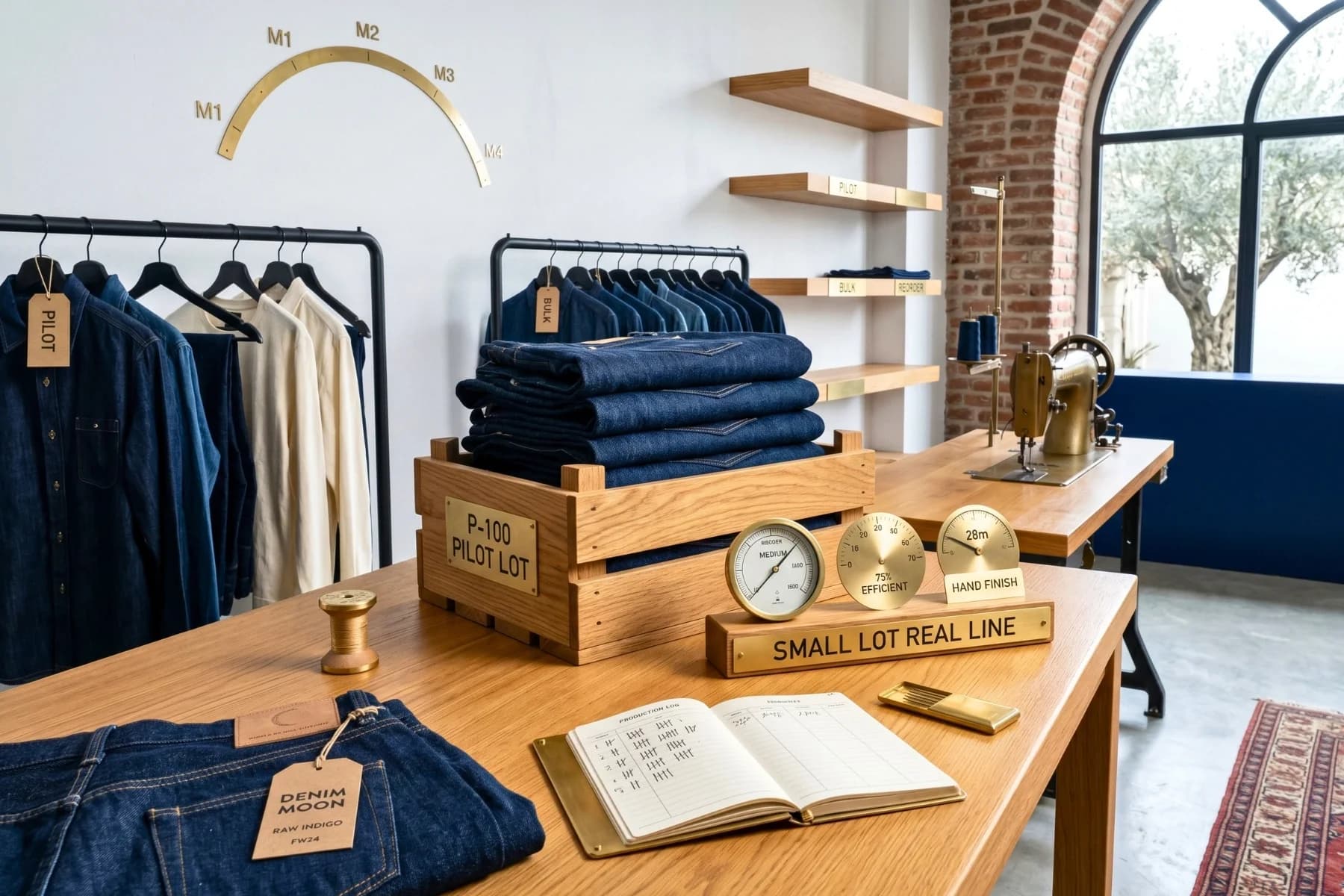
Pilot production runs systematically through the line at small lot; production speed, line efficiency, fabric consumption and hand-finish calibration are measured in real conditions. Pilot output forms estimation base for bulk runs.

Pilot Evaluation
04

Pilot Evaluation

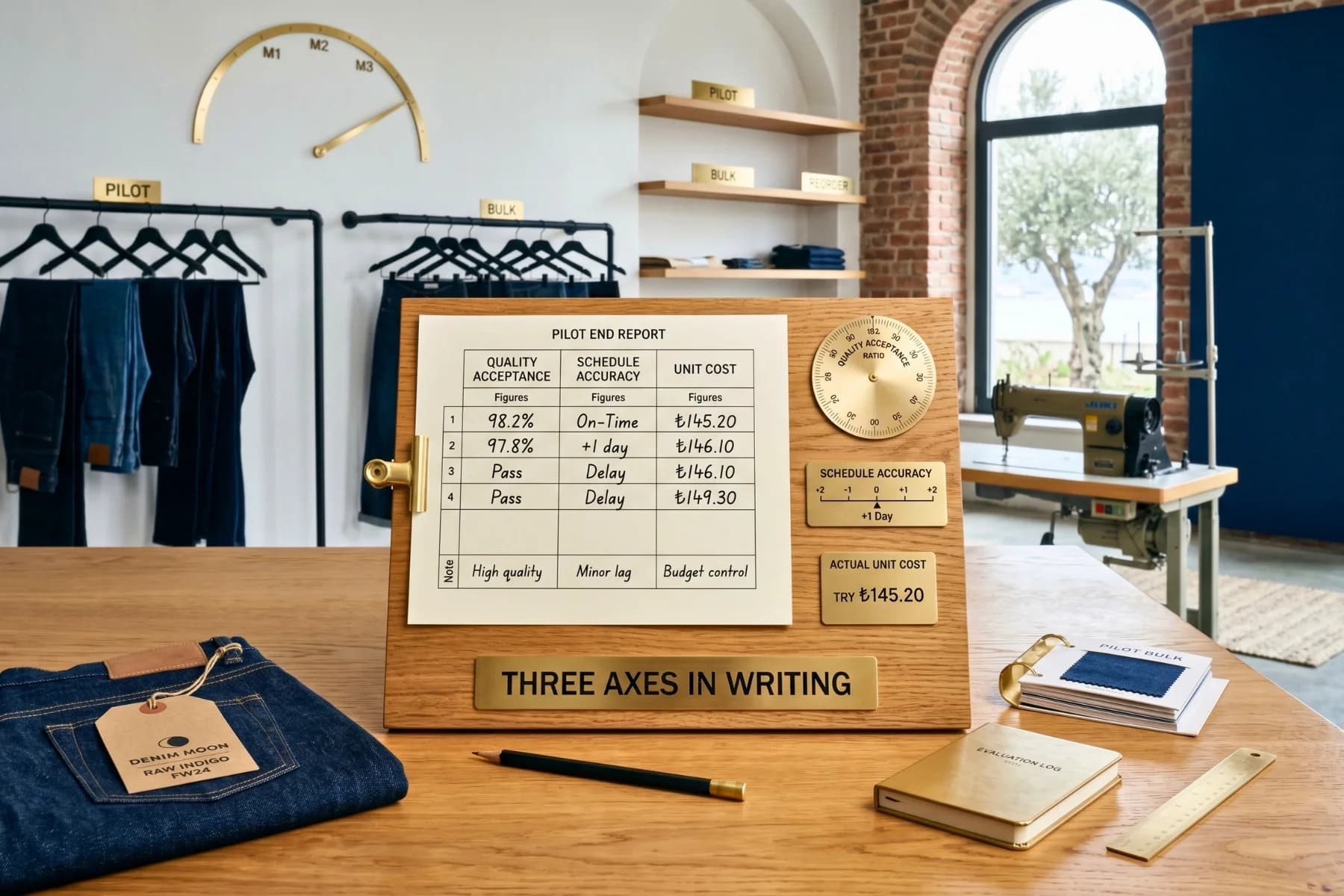
The pilot-end report is objectively evaluated on three axes; quality acceptance ratio, schedule accuracy percentage and actual unit cost numbers. Three axes are presented in a written table, scale decision meeting prep is made together.

Bulk Move Decision
05

Bulk Move Decision

Bulk move decision is made systematically with the client after pilot evaluation; three-axis approval, client written signature and bulk lot size become clear in one document. Decision systematically transfers to the production line plan.

Reorder Rhythm
06

Reorder Rhythm

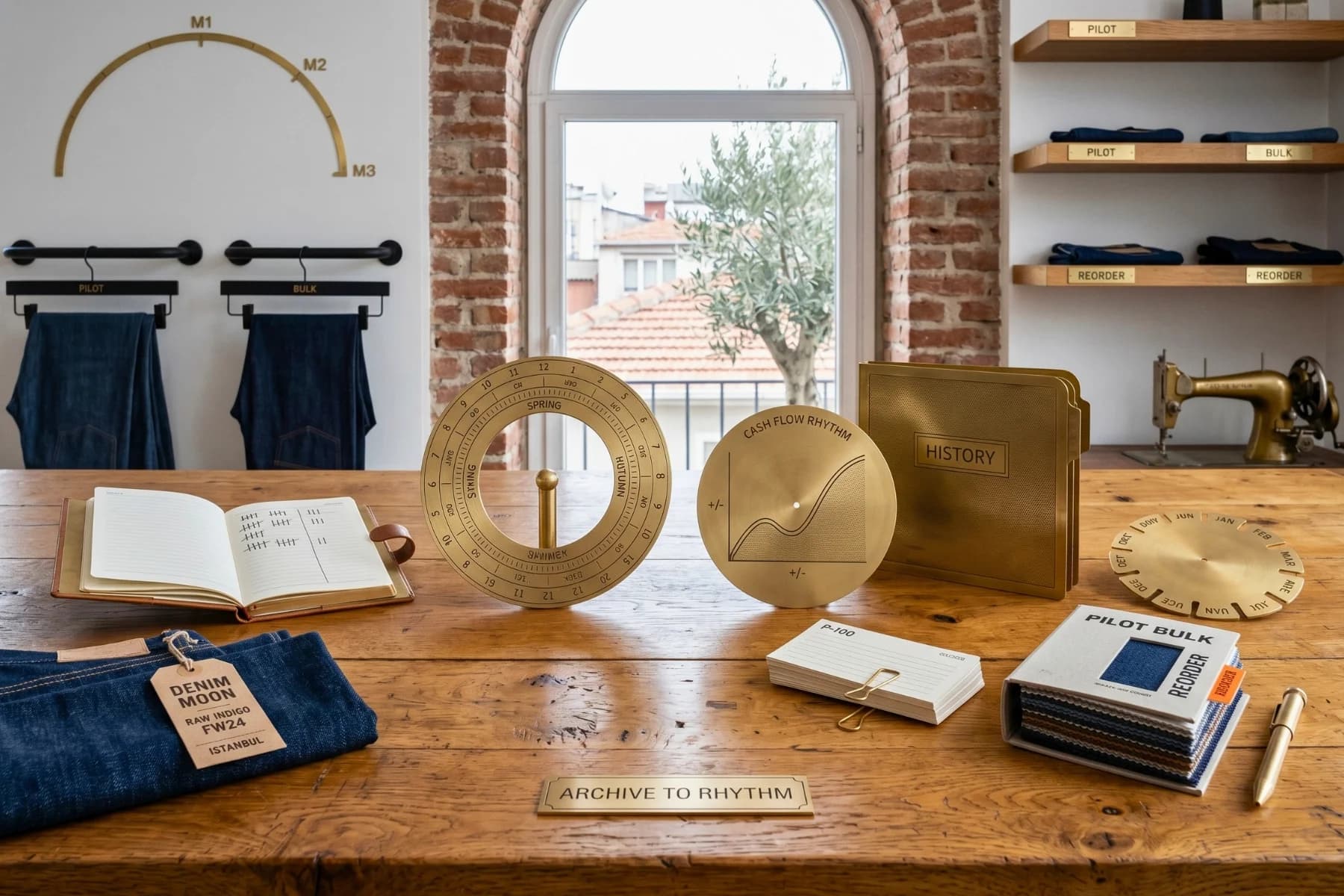
Reorder rhythm starts systematically after bulk lot delivery; based on brand sales cycle, the forecast algorithm continuously feeds line planning together with cash flow alignment. Reorder opens from the archive cleanly, history is read.

Three Lanes One Tempo

Flexible Production Models

Flexible production models give the growing brand systematic tempo across three lanes; pilot lane handles small-scale test launch, bulk lane carries main production flow, reorder lane sustains repeat order speed. Aligned to growth.

Pilot Lane

Pilot lane is where small-lot test production runs systematically; pilot brief, pilot budget and evaluation gather in one lane.

  • Small-lot test production runs systematically
  • Pilot budget and targets defined in advance
  • Pilot-end report objective evaluation frame

Bulk Lane

Bulk lane carries the main production flow after pilot approval; bulk lot size, line calibration and cash flow run together.

  • Main production flow systematically calibrated
  • Line capacity bound to brand growth forecast
  • Cash-flow-aligned bulk lot delivery system

Reorder Lane

Reorder lane systematically supports reorder rhythm; fast replenishment and scale flexibility are delivered by sales cycle.

  • Fast replenishment bound to brand sales cycle
  • Reorder discount scaling with order volume
  • Stock balance optimized via forecast algorithm
One Model Isn't Enough

From MOQ to Flexible Partnership

MOQ pressure slows the growth momentum of growing brands; high minimum order, single-type model and inflexible terms put growth investment at risk. The flexible partnership model converts pressure into investment opportunity across lanes.

HIGH MOQ

High MOQ Pressure Model

Brand
Brief
High MOQ
Stock Load
  • High MOQ systematically locks up capital
  • Stock load pressures cash flow heavily
  • Single-type lot offers no flexibility
  • Reorder discount is not structured up
  • Growth momentum loss happens often
Flexible MOQ

Denim Moon Flexible Partner Model

Brand
Brief + Pilot Lot + Scale Flow
  • Structured pilot investment in size
  • Flexible payment calendar aligns flow
  • Pilot-Bulk-Reorder three flexible lanes
  • Scale discount supply chain systematic
  • Growth-bound rhythm and pace systematic
Three Doubts One Roadmap

Three Concerns Before the Growth Talk

Before the growth talk starts, three typical concerns growing brands face become clear so the meeting goes productively; will MOQ pressure be managed, is my plan ready, what comes out. Three doubts laid out in one shared roadmap.

Flexibility Not MOQ

Is the Talk About MOQ Pressure?

Growing brands' first concern is fair; the talk is built not around MOQ pressure but around flexibility design. Pilot lot, scale calibration and reorder rhythm three-lane system are shared transparently, MOQ pressure turns into flexibility.

Plan Gaps Welcome

Is My Growth Plan Ready Set?

Second concern is common; an incomplete growth plan can come to the table and gets completed together at the meeting. Current sales rhythm, target market position and cash flow status systematically convert from verbal input to a written plan.

Concrete Roadmap

What Roadmap Comes Out of the Talk?

Third concern demands a concrete answer; thirty minutes deliver a one-page roadmap systematically. Smart cost draft, pilot scale suggestion, indicative timeline and cash flow alignment model are delivered as a written package to brand.

Three Numbers One Orbit

Annual Growth Partnership Scale

Growth partnership is measured by three concrete annual trajectories; count of scaling brands shows portfolio width, active growing partners show depth, and reorder ratio shows growth continuity. Numbers form the growth trajectory itself.

0Brands/Yr

Annual Scaling Brands

0Active Brands

Active Growing Partners

0%

Annual Reorder Rate

Scaling Testimony

Voices from Growing Partners

Growing brand partners share smart cost alignment, flexible pilot lot rhythm and sustained growth roadmap first-hand; pilot deliveries, lot calibration and cash flow alignment turn into living testimony from the atelier.

4.17/ 5.0★★★★☆Average of 1 evaluations
Product Quality
4
Delivery Performance
4
Communication & Response
5
Price-Value Balance
4
Flexibility & Solution Focus
4
Willingness to Work Again
4
★★★★☆4.2

[Kuzey Avrupa büyüyen bir marka]

Growing Brand

Ölçek büyütme sürecinde yapılandırılmış destek ve açık iletişim sunuyorlar.

1-2

Thirty Minutes First Trajectory

Let's Plan Your Growth Roadmap Talk

In a thirty-minute meeting, your growth roadmap is discussed together on three axes—smart cost, flexible pilot lot and cash flow alignment; a one-page roadmap is delivered as a written package.

Select a form to display here.

Digital Scale Is Also Our Priority

Digital scale is also an extension of the same discipline. Let's discuss the back structure of the fast sales cycle.

Explore Our Pace
Denim Moon © 2026 · Powered by Dimotihe