Design & Sample Development

From Idea to Physical — Structured Design Discipline

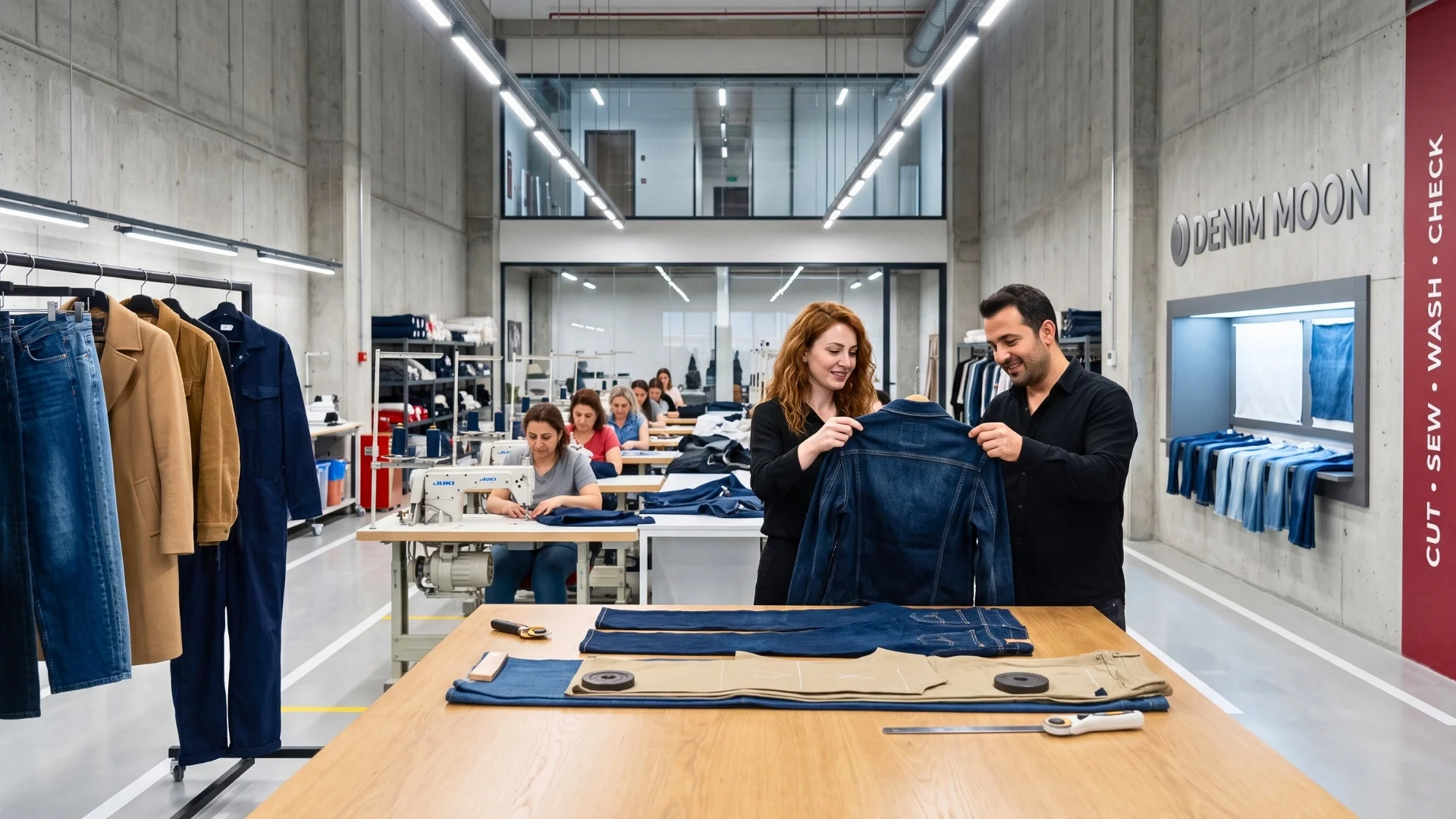
Through design support, pattern engineering and a structured sample workflow, we transform ideas into producible and approvable physical products.

[object Object],[object Object]
Scroll Down
Three Lines One Standard

Capability Framework

We structure design and sample development capability via three lines: creative partnership, technical precision and staged approval. Lines run with separate parameters; we build framework not slogans, calibrating the idea-to-product flow.

Creative Partnership

We start with active participation in the design process — season trends, fabric research and color palette work are structured around the client brief; brief-to-concept direction is built with the Denim Moon team, framed by target market and cost range.

A briefless start lengthens negotiation and revision cycles; brief processing discipline runs in the first talk, with verbal references as starting points.

Technical Precision

CAD pattern design, size grading, fit optimization and manufacturability validation — four axes guarantee technical consistency before mass production. Right-first-time discipline minimizes trial loops and clarifies cost drift across line transitions.

Without manufacturability check, trial loops extend and line parameter sets clash; right-first-time discipline clarifies cost calibration across line transitions.

Staged Approval

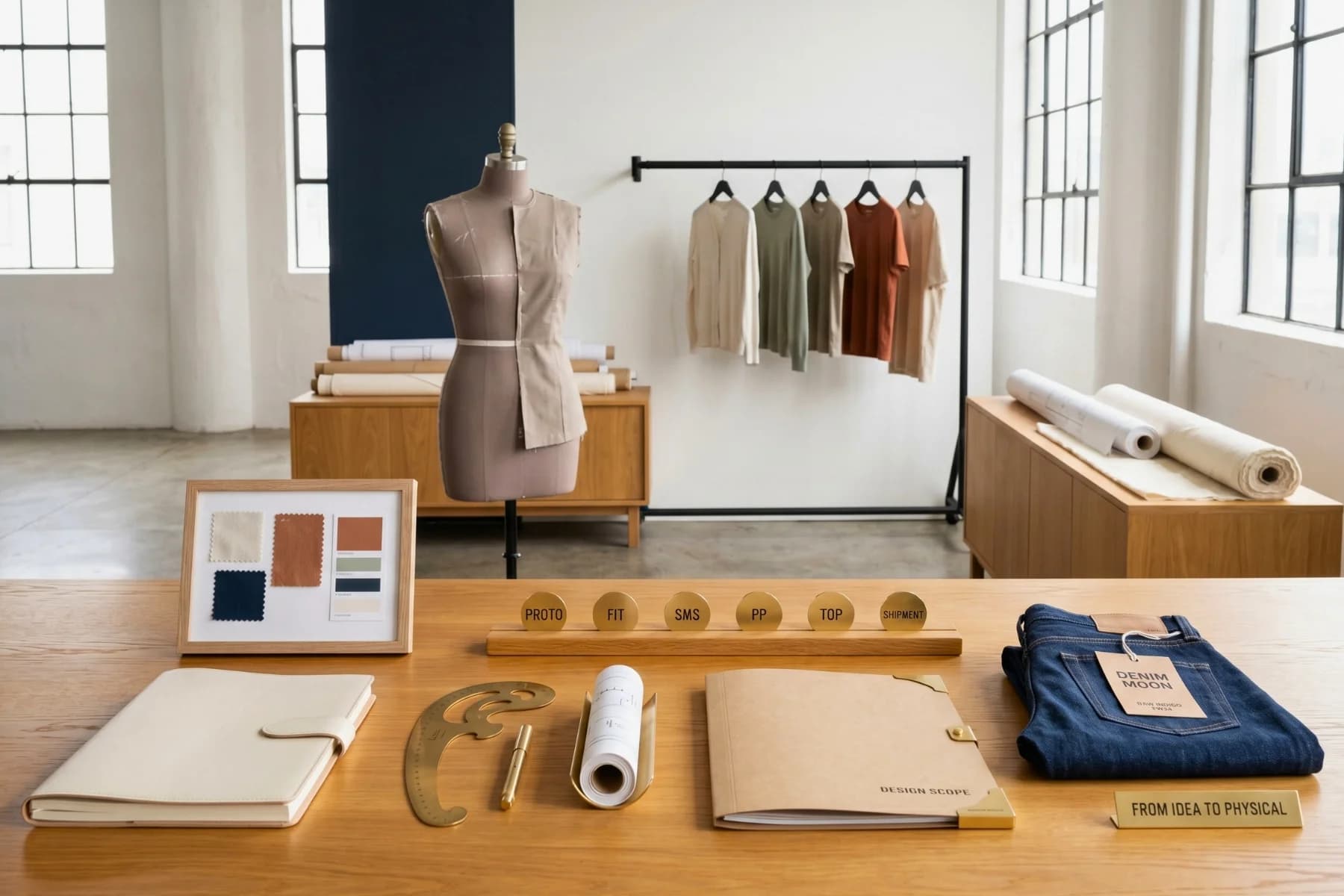
Proto, Fit, SMS, PP, TOP and Shipment: six stages are structured on prior-stage approval; each stage is tied to written approval through the tech pack. The final product is calibrated to client spec batch by batch, and reorders run from the PP reference.

A skipped-stage sample cycle causes inconsistency in mass production; each gate closes within a 24-hour window and the next stage does not begin without it.

[object Object],[object Object]
Four Directions One Brief

Trend Analysis & Collection Development

Denim Moon joins collection development as creative partner: a four-direction brief processing structures season trends, fabric research, color palette and season strategy under one frame. Target market and cost range frame each direction.

Trend Analysis

Season trends and international fashion platforms are systematically tracked.

Fabric Research

Fabric fairs, weaving techniques and innovative surfaces are matched to project goals.

Color Palette

Season-specific color choices are calibrated to brand identity and target market.

Season Strategy

Season launch, shelf date and campaign plan fit into the collection calendar.

[object Object],[object Object]
Four Axes One Validation

Pattern & Model Engineering

Pattern engineering turns design into producible form: CAD builds the base pattern, size grading calibrates each range, and fit optimization verifies against the target market. Four axes frame technical consistency before production.

CAD Pattern Design

Computer-aided pattern design builds the base size pattern in a digital environment.

Size Grading

Size ranges are scaled in correct proportions; measurement drift is checked per batch.

Fit Optimization

The pattern is validated against fabric structure and target market size standards.

Manufacturability Check

Manufacturability check detects technical issues before mass production starts.

Six Stages One Flow

Sample Development Discipline

The sample development process has six sequential stages, each advancing only on the written approval of the previous. This disciplined flow calibrates the final product to client specification, technical frame and mass production standard.

First Physical Form

Proto Sample

The design concept is transformed into physical form for the first time: proportion, silhouette and overall structure are verified. It can be produced with an alternative fabric of similar properties; the first reference shaping direction.

Fit Verification

Fit Sample

Body fit and pattern accuracy are tested: fit, drape and ergonomic comfort are evaluated on the target body size. Pattern revisions are completed; pattern and measurement approval forms the foundation of the mass production pattern.

Market Presentation

SMS Sample

The market sample is prepared for the client's sales team, buyers and catalog shoots: final fabric, color and accessory choices are verified. Representing the market-ready version, it serves as the reference in sales and order collection.

Pre-Production Approval

PP Sample

The final verification before mass production: final fabric, accessory and label specs are detail-checked. The PP sample sets the mass production reference standard; the line is calibrated to this sample, output is the launch approval.

Production Reference

TOP Sample

The verification sample taken from the first batch after mass production begins: line output is checked for full compliance with the approved PP sample. It serves as core reference standard ensuring quality consistency throughout the run.

Delivery Verification

Shipment Sample

The final verification sample at pre-shipment inspection: packaging, labeling and visual quality compliance are detail-checked. Before dispatch, it is evaluated as the final approval reference, determining the shipment release clearance.

Three Virtual Bridges

Digital Design Infrastructure

Digital design infrastructure visualizes design virtually before physical sampling: 3D modeling, fabric simulation and fit approval connect via three bridges. The infrastructure shortens the sample cycle and clarifies decision time.

Concept Modeling

3D Sample

With 3D sample technology, designs are modeled in three dimensions; proportion, volume and silhouette are verified in a virtual environment. Concept approval can be obtained without a physical sample, saving time and cost from the cycle.

Drape & Texture

Fabric Simulation

Digital fabric simulation reflects fabric drape, surface texture and color tones on screen in near-real form. Drape behavior is checked virtually; texture-fabric matching integrates into the design decision and clarifies fabric choice early.

Pre-Sample Stage

Virtual Fit Approval

Virtual fit approval allows the client to evaluate the design without waiting for a physical sample. Virtual body testing calibrates collection direction early; design revisions are completed before the sample stage and the cycle accelerates.

Three Gates One Trail

Tech Pack & Version Discipline

The tech pack is the single reference file for production: measurement, stitch, accessory and fabric data converge on one spine. Revision, version and approval run through three gates; the decision trail reads at each stage.

Tech Pack Structure

The tech pack contains measurement tables, stitch details, accessory specs and fabric information; it is the single reference file for production.

Missing tech pack triggers guesswork in production; a single reference file cuts ambiguity.

Revision Management

Each revision request is logged with version numbering on the tech pack and BOM; all parties work simultaneously from the same versioned trail.

Unversioned revisions lead to different files on lines; number-trail prevents confusion.

Approval Window

Each stage closes with written approval: a 24-hour window, a 48-hour director escalation and a 72-hour general manager tier are clearly defined.

Transition without approval breaks supply schedule; escalation tier safeguards decision time.

Three Questions One Answer

Three Thresholds Before the Sample Talk

Before sampling opens, three common concerns meet a clear answer: a verbal brief lowers the threshold, stage discipline shortens the schedule, the PP sample is the line's calibrated reference. Three thresholds close before the talk.

Can Work Begin Without a Full Brief?

The first talk is discovery, not a sale; a verbal account, mood board or reference product builds the starting point.

  • Verbal account meets the discovery talk
  • Mood boards and swatches set direction
  • Reference product or catalog opens the path

Can a Stage Be Skipped?

From Proto to Shipment, six stages advance on written approval; stage discipline comes slow first, then shortens the schedule.

  • Skipping a stage breaks line alignment
  • Written approval seals every gate
  • Discipline shortens the total schedule

Can the PP Sample Be the Reference?

The approved PP sample is the calibrated reference of the production line; all batches are evaluated against this sample.

  • PP sample sets a single standard
  • Line is calibrated to this sample
  • Reorders run from the same record
Half Hour First Direction

Let's Plan Your Sample Brief Talk

In a half-hour discovery meeting we shape your sample brief together. You leave with four concrete outputs: scope reading, fabric suggestion, first sample roadmap, and schedule-cost reference.

Select a form to display here.

Character Imprint Is Also Our Priority

Discover the process that gives character and imprint to the product and how invisible parameters are calibrated.

Explore Our Character
Denim Moon © 2026 · Powered by Dimotihe