About Us
- Company ProfileMeet your global production partner
- Vision & Operating ModelDiscover our six-stage production discipline
- Management & OrganizationSee the team that runs the process
- MilestonesTrace our path from day one to 2030
- Trade Fair Calendar & ParticipationMeet us face to face at the fairs
- Awards & FeedbackRead our verifiable references
Explore Our About Us Pages

Knowing a manufacturer is not reading a brochure, it is examining a record. You can review our identity, operating model, management, history, fair calendar and feedback across six separate pages.
Start with Company ProfileHow We Work
- Production ModelsChoose the model that fits you
- Commercial Scale & MOQPlan your order volume with us
- Logistics NetworkFollow our shipping and customs flow
- Digital InfrastructureReview our single version and approval line
- SustainabilityRead our three-axis measurement framework
- CertificationsOpen our four independent audit records
Read How We Work

How we work is not learned after the order, it is read before it. Review our production models, MOQ approach, logistics network, digital infrastructure and certifications across six pages.
Start with Production ModelsProduction
- Denim ManufacturingExplore denim from cutting to assembly
- Woven & Non-Denim ManufacturingLearn our fabric scope beyond denim
- Design & Sample DevelopmentSpeed up the path from idea to sample
- Washing & FinishingKnow the recipe behind lot consistency
- Facilities & CapacityCalculate capacity under one roof
- Quality ControlTrack our six control points in order
Follow Our Production Line
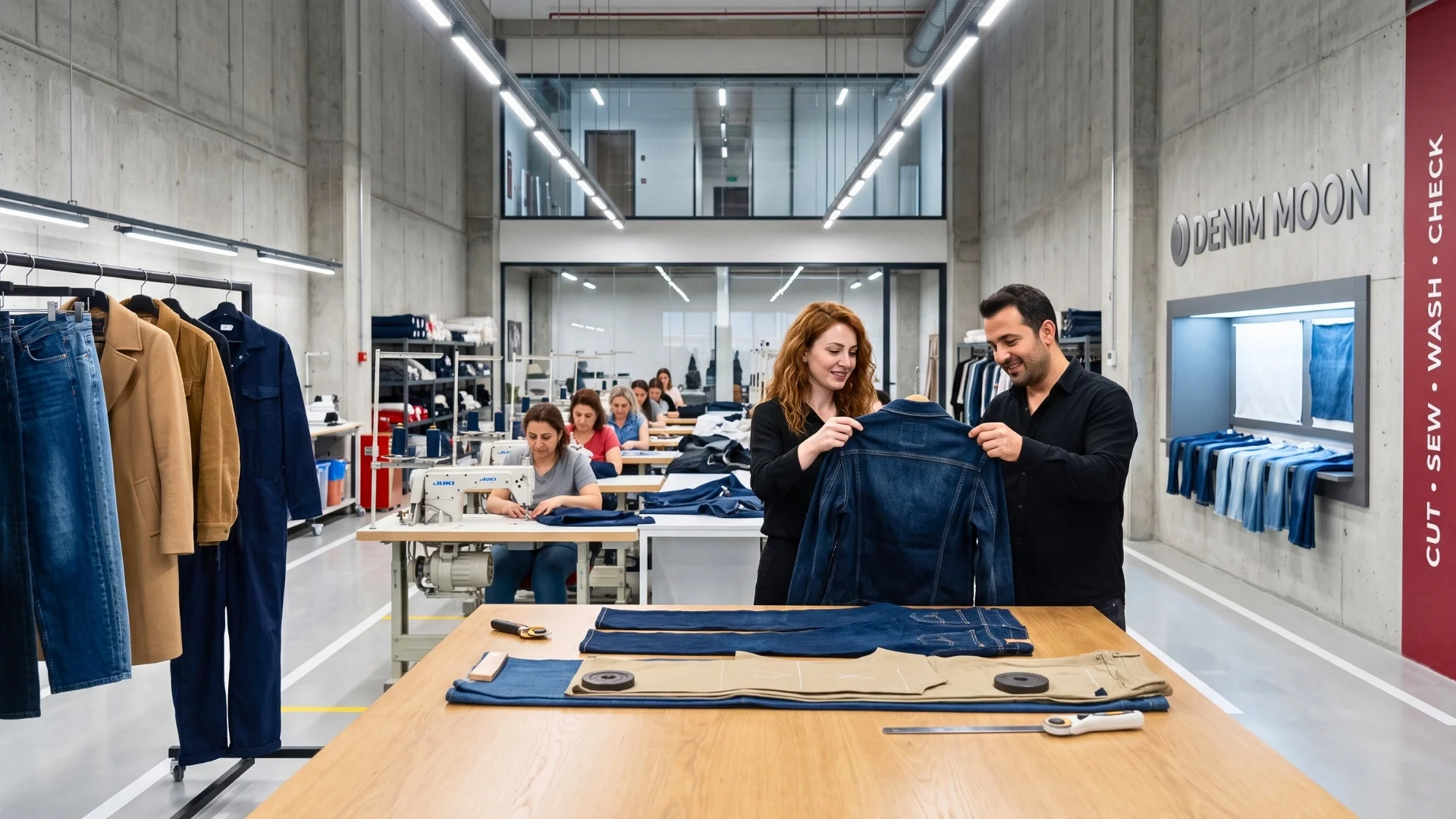
Manufacturing is not one line, it is six connected disciplines. Review our denim and non-denim lines, sampling, washing, facility capacity and quality control across six separate pages.
Start with Denim ManufacturingWho We Work With
- Retail ChainsScale without losing quality
- Designer & Boutique BrandsCarry your design intact into production
- Growing BrandsGrow with pilot lots that lower risk
- E-Commerce OperatorsSwitch from stock to repeat production
- Buying Offices & DistributorsManage many brands from one centre
- First Collection BuildersBuild your first collection with guidance
Find Your Own Profile
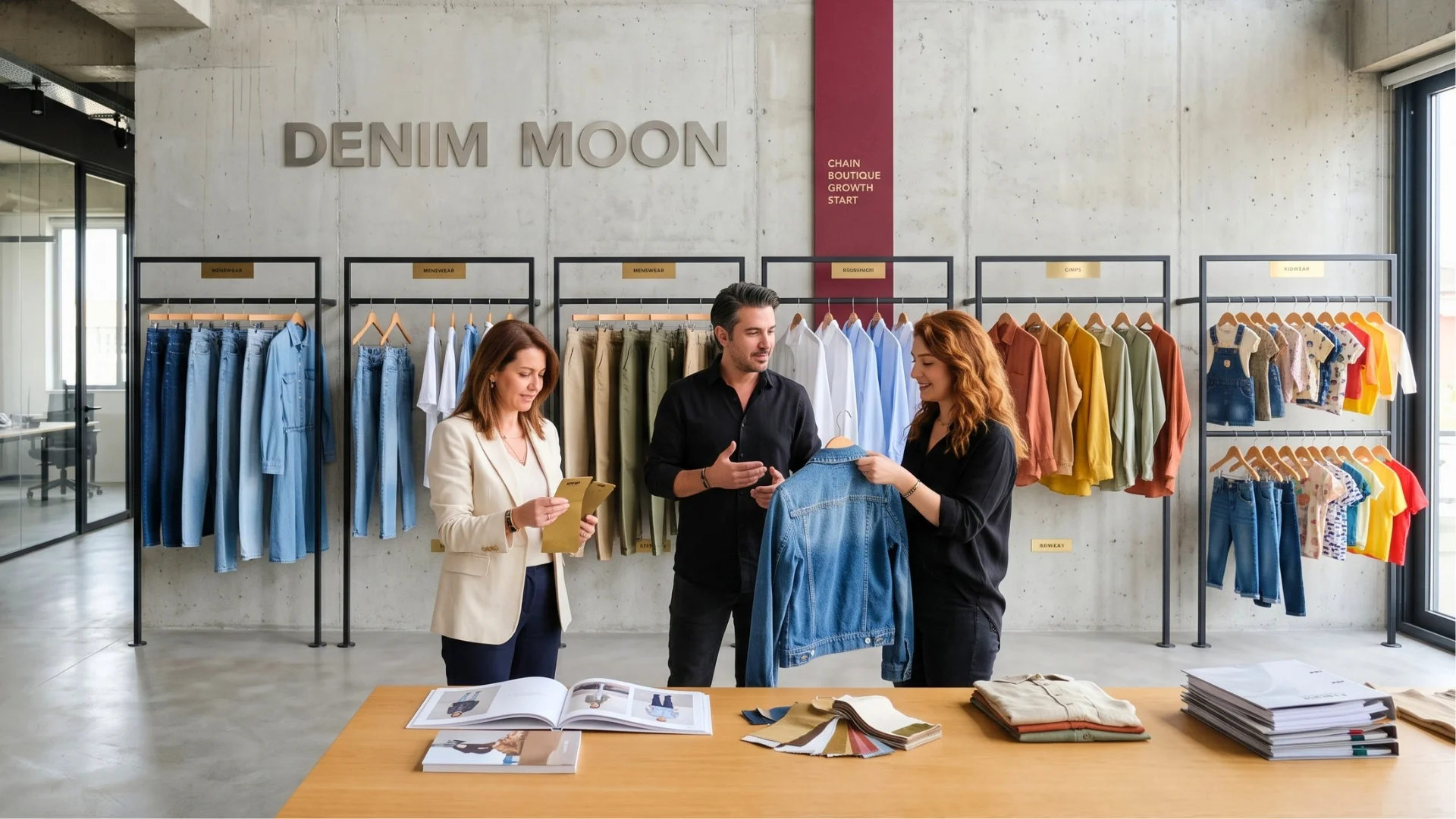
No two brands want the same thing; chains want consistency, boutiques want privacy, growing brands want scale. You can review six buyer profiles and our answer to each across six separate pages.
Start with Retail ChainsWomen's Collection
- Women's Bottom WearExplore the women's trousers, skirt and shorts categories
- Women's Top WearExplore the women's shirt and blouse categories
- Women's OuterwearExplore the women's jacket, shacket, trench coat, blazer, overcoat and vest categories
- Women's DressesExplore the women's dress category
- Women's JumpsuitsExplore the women's jumpsuit and dungarees categories
- Women's WorkwearExplore the women's workwear trousers, shirt, jacket, vest and jumpsuit categories
Men's Collection
- Men's Bottom WearExplore the men's trousers and shorts categories
- Men's Top WearExplore the men's shirt category
- Men's OuterwearExplore the men's jacket, shacket, trench coat, blazer, overcoat and vest categories
- Men's JumpsuitsExplore the men's jumpsuit and dungarees categories
- Men's WorkwearExplore the men's workwear trousers, shirt, jacket, vest and jumpsuit categories
Kids' Collection
- Kids' Bottom WearExplore the kids' trousers, skirt and shorts categories
- Kids' Top WearExplore the kids' shirt category
- Kids' OuterwearExplore the kids' jacket, shacket, trench coat, blazer, overcoat and vest categories
- Kids' DressesExplore the kids' dress category
- Kids' JumpsuitsExplore the kids' jumpsuit and dungarees categories
See Our Collection Capability
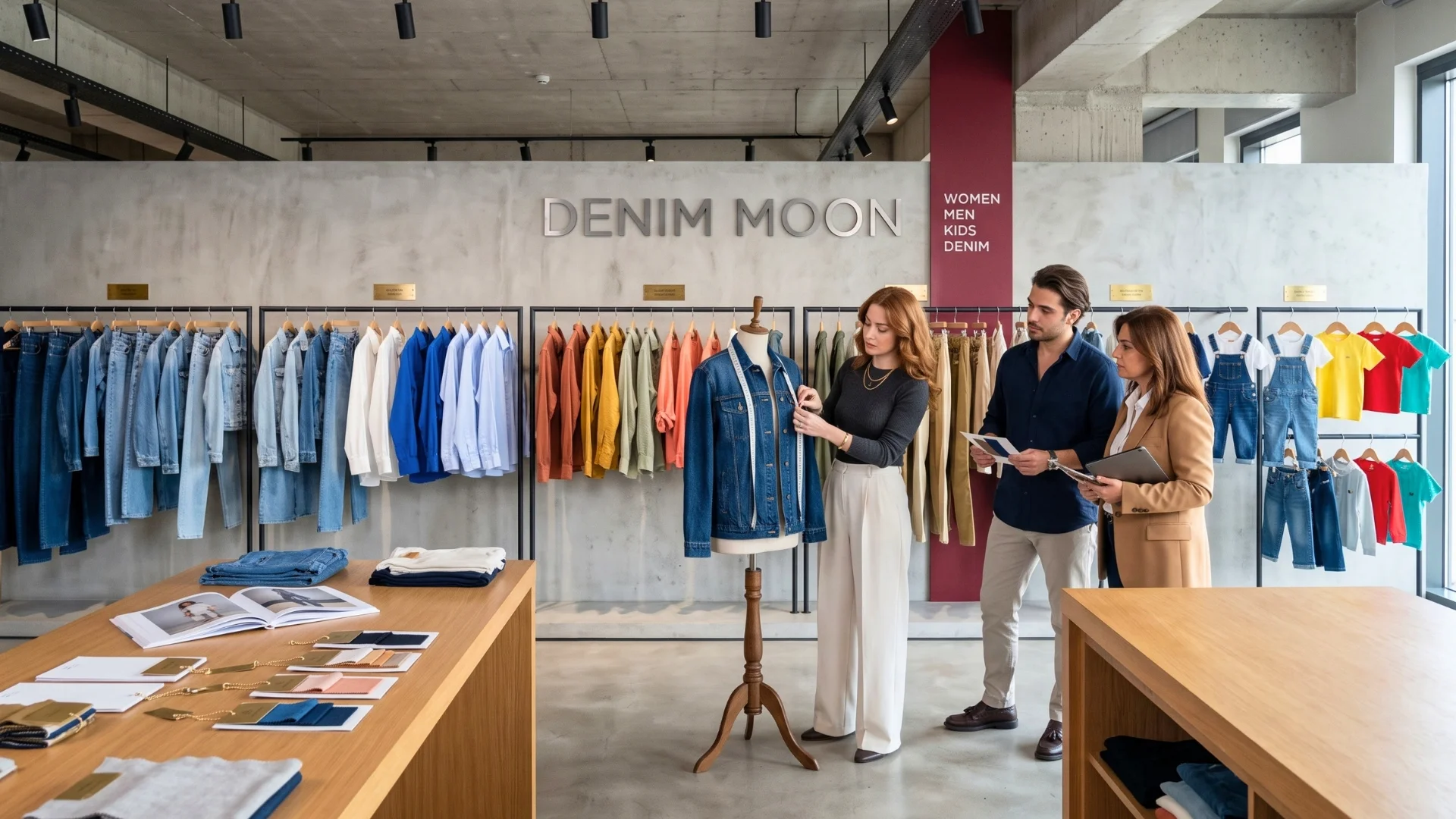
Every piece shown here is Denim Moon's own design; partner collections are never put on display. You can review all sixteen categories across women, men and kids in your own order.
See the Full CollectionReach the Right Unit

There is no single door to reach us. An operational request, a partnership offer and a job application go to separate units; review all three on three pages and get a first reply within 24 hours.
Start with Contact
![[object Object],[object Object]](/_next/image?url=%2Fuploads%2F417f1f26-281a-4f94-b3d2-2e72c4ad698f%2Fdenim-moon-denim-production-scope-5-categories.webp&w=1920&q=75)
![[object Object],[object Object]](/_next/image?url=%2Fuploads%2Fd7be30a8-bf62-47f8-a2f6-f108e6e17a28%2Fdenim-moon-denim-cutting-operations-millimetric-precision.webp&w=1920&q=75)
![[object Object],[object Object]](/_next/image?url=%2Fuploads%2F421bb7af-33db-4033-bd21-9bd0c8ee4d28%2Fdenim-moon-sewing-assembly-process-needle-to-label.webp&w=1920&q=75)