Your Multi-Brand Portfolio Doesn't Mix — With Brand-Based Structure
For trade agents and distributors, partnership runs multi-brand portfolio via brand-based isolation, parallel orders and reputation protection.

Trade agents, buying offices and distributors carry multi-brand portfolios every season; manufacturer choice is not only a sourcing decision, it imprints directly on each brand's reputation. Brand-based isolation turns it into clear order.
Parallel order flow raises mix-up risk fast in mid-season; lot prefix, brand traceability and SPOC escalation tier run each brand within its own master spec frame at all times. Order, not chaos, is set straight by the decision.
Brand-based structure gives the agent partner multi-brand portfolio execution trust at a single producer; each brand tone and colour palette stay in its own file, shared panel report carries earned reputation into long-term partnership.

Multi-brand portfolio standard turns multi-brand load of agent and distributor partners into one structure across six sequential stages; brand profile, SKU mapping, master spec, parallel line, lot prefix and dispatch report run in chain.
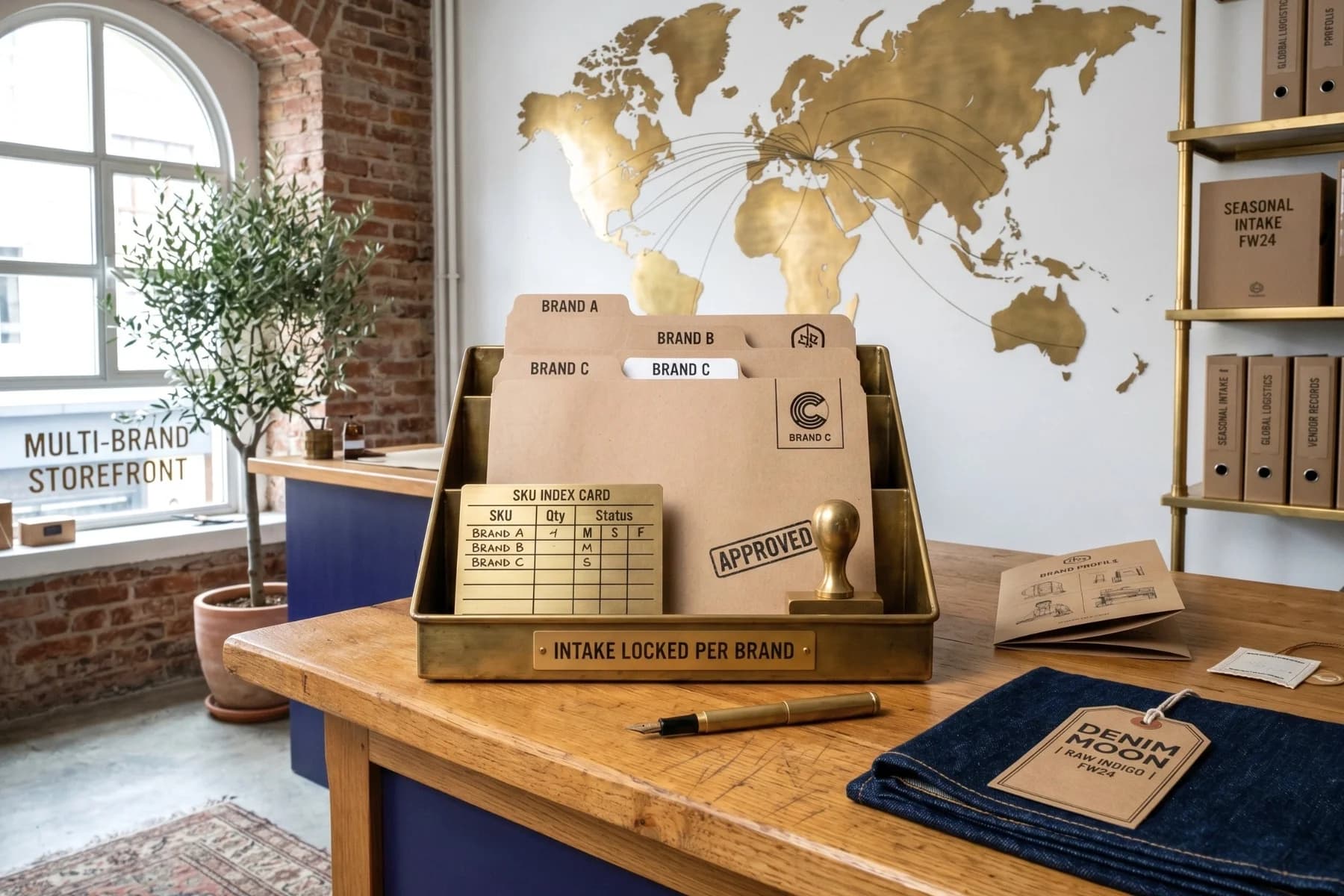
Brand profile file systematically opens each brand's core identity; logo, label, colour palette, stitch and trim preferences are locked in a written file. Visual and technical identity is held intact, accessed clean at season start.
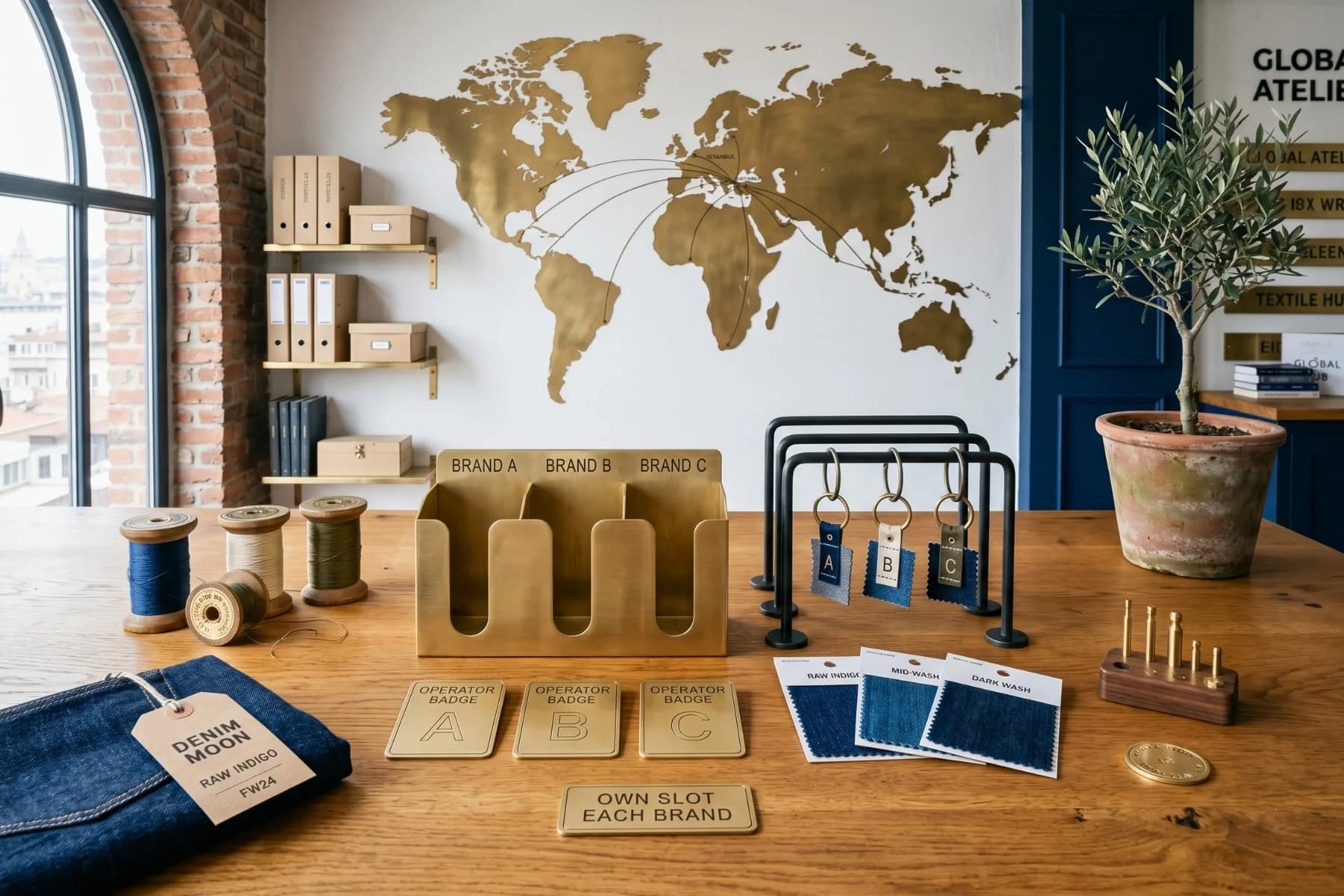
SKU mapping draws each brand's product list as an isolated table; SKU code, size matrix, target collection and order calendar all stand on one written table. Brand-to-brand mix-up risk is prevented at list level right from the start.
Master spec frame locks each brand's products within its own technical wholeness; fabric type, wash effect, stitch type and tolerances run linked to the brand's master file. Spec drift is stopped by a blocking pre-production approval step.
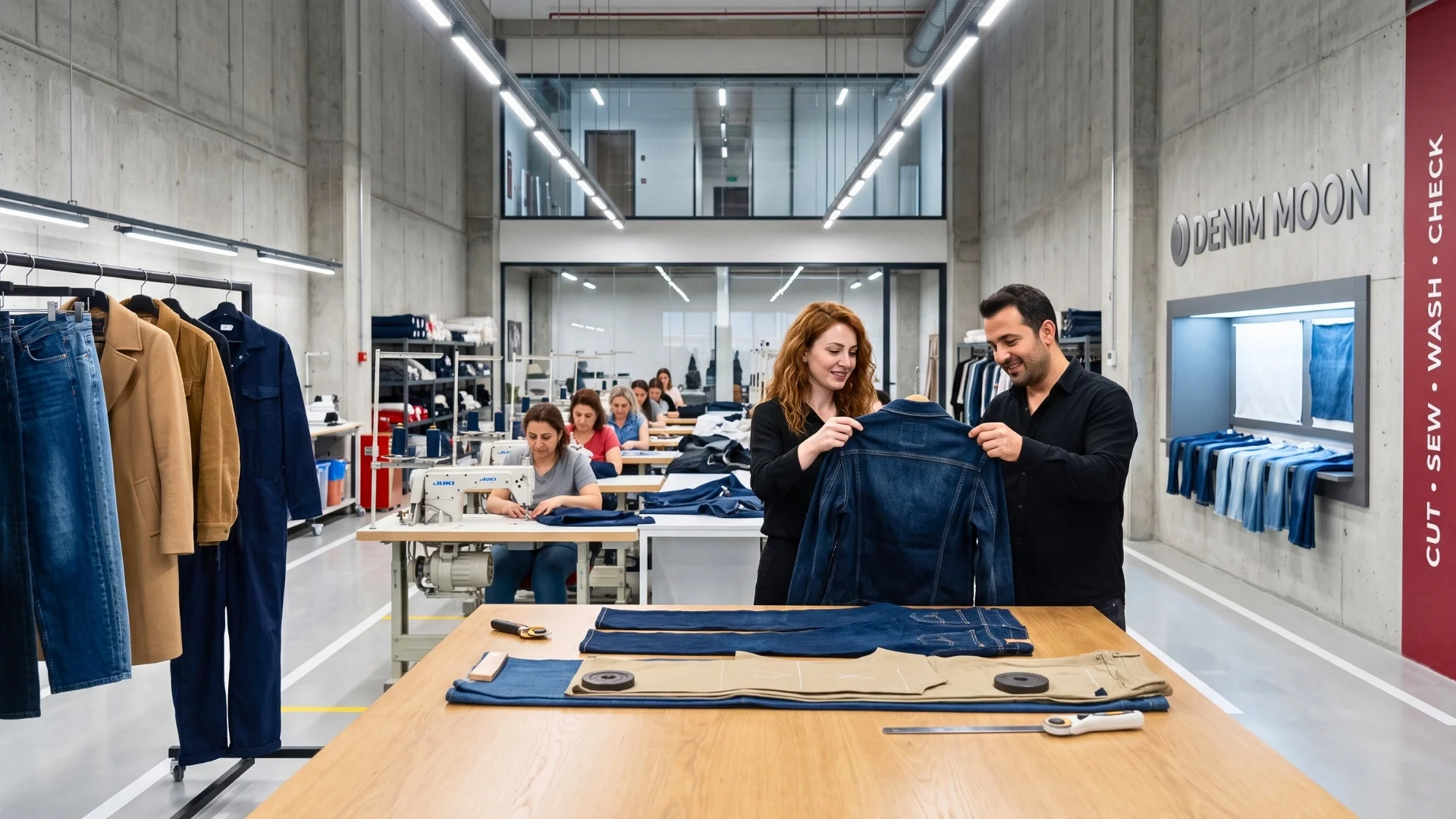
Parallel order line runs multi-brand orders in the same atelier without mixing them up; each brand works tied to its own line slot, its own machine and its own operator team. Brand-based isolation holds across all chain stages clearly.
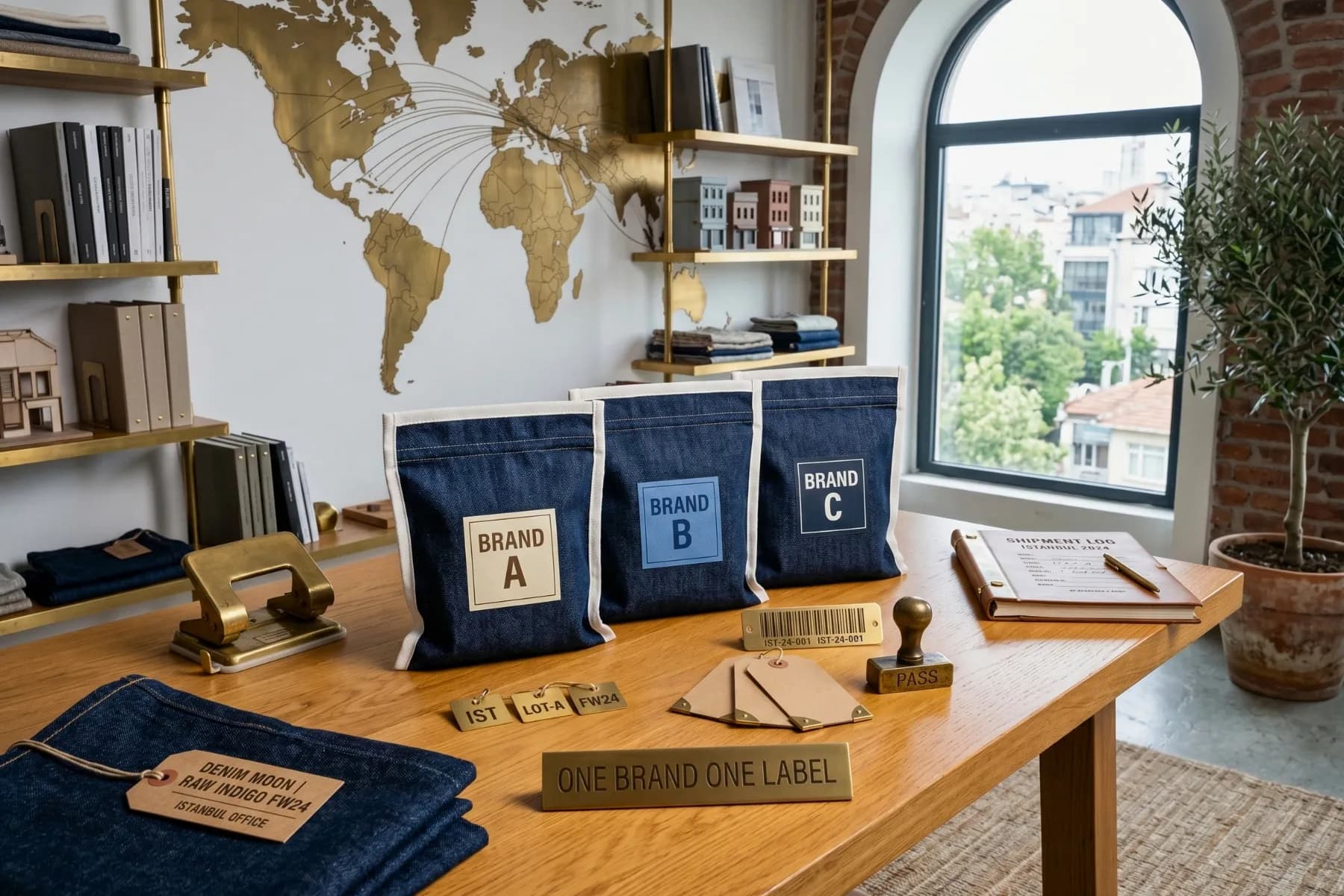
Lot prefix marking ties each production lot to its owning brand at label level; brand code, season number and lot sequence number combine into one prefix string. Mix-up chance is systematically removed at dispatch barcode scan step.
Brand dispatch report is delivered as a separate written package for each brand; order items, produced quantity, QC report and missing item list are presented in brand-specific format. The agent partner forwards each report directly.
Brand-based standard discipline preserves the unique identity of each brand in agent and distributor portfolio across six dimensions; trim card, wash recipe, pattern block, care label, QC tolerance and polybag set run as separate files.
Trim card file systematically freezes each brand's accessory identity; button finish, zipper brand name, rivet stamp, sewing thread and label composition are recorded in writing per brand. Mix-up at accessory sourcing is prevented from start.
Wrong trim hits product reputation directly; each trim card is locked with brand approval before sourcing, drift alert is auto-triggered fast.
Wash recipe lock holds each brand's effect signature in an isolated file; chemical ratio, abrasion time, stone type and enzyme dose run as a written master recipe per brand. Recipe drift is stopped by pilot wash before production.
Wash tone drift damages brand visual signature; recipe library is foldered per brand name, drift tolerance is measured by pilot panel from start.
Pattern block fidelity systematically preserves each brand's fit DNA; waist position, leg opening angle, front rise and pocket placement are processed against the brand's master block. Fit drift is stopped at the first sample with a filter.
Fit drift damages brand customer loyalty directly; master block is frozen in PLM records, every revision request runs with brand approval gate.
Care label lane systematically meets brand-specific care instructions for the target market; EU, UK, USA and other market regulations are managed in a separate file per brand. Brand-market match passes a cross-check table before label print.
Wrong market label brings serious customs return risk; each label approval passes the market-brand match matrix, drift is blocked at sourcing.
QC tolerance table systematically records each brand's quality acceptance threshold; measurement tolerance, stitch AQL level, wash defect limit and fabric flaw grade are frozen per brand. Tolerance softening requests run via brand approval step.
Unclear tolerance leads to disputed acceptance calls; each season-start tolerance table is signed at brand panel review, drift goes on record.
Polybag hangtag set systematically completes each brand's packaging signature; polybag size, hangtag paper type, print layout, hang direction and master carton label run on a separate template per brand. Carton mix-up is blocked before dispatch.
Wrong brand on carton creates mixed dispatch; brand-carton match is verified at the final barcode step before shipment, drift is filtered fast.
![[object Object],[object Object]](/_next/image?url=%2Fuploads%2F5f4f8716-23f4-401a-86d7-5c09e16b734e%2Fdenim-moon-multi-customer-operations-model-four-axes-one-reputation.webp&w=1920&q=75)
Multi-customer operations model runs multi-brand portfolios for trade agent, buying office and distributor partners on four axes; customer SPOC, synchronous calendar, brand approval loop and cross panel bind to one reputation.
Customer contact ties one SPOC per agent portfolio, comms chaos cleared upfront.
Synchronous work calendar runs multi-brand orders in parallel, wait time drops.
Brand approval loop gives each brand its own round at brand tempo, identity holds.
Cross-visibility panel shows the agent all brand progress on one screen clearly.
Multi-brand dispatch flow unites brand-based isolation, cross QC filter and parallel logistics into one bridge across six sequential stages for agent partners; order intake, line open, QC, packing, dispatch and report flow continuously.

SKU list intake is the starting point of the multi-brand dispatch flow; each brand's SKU file, quantity matrix and target market info in the agent portfolio gather in one submission. Scope is frozen with brand approval, line is informed.

Isolated line open systematically allocates each brand its own atelier slot; fabric, trim, pattern and operator team calibrate per brand name, inter-line mix-up is prevented from start. Brand-based isolation holds in parallel flow.

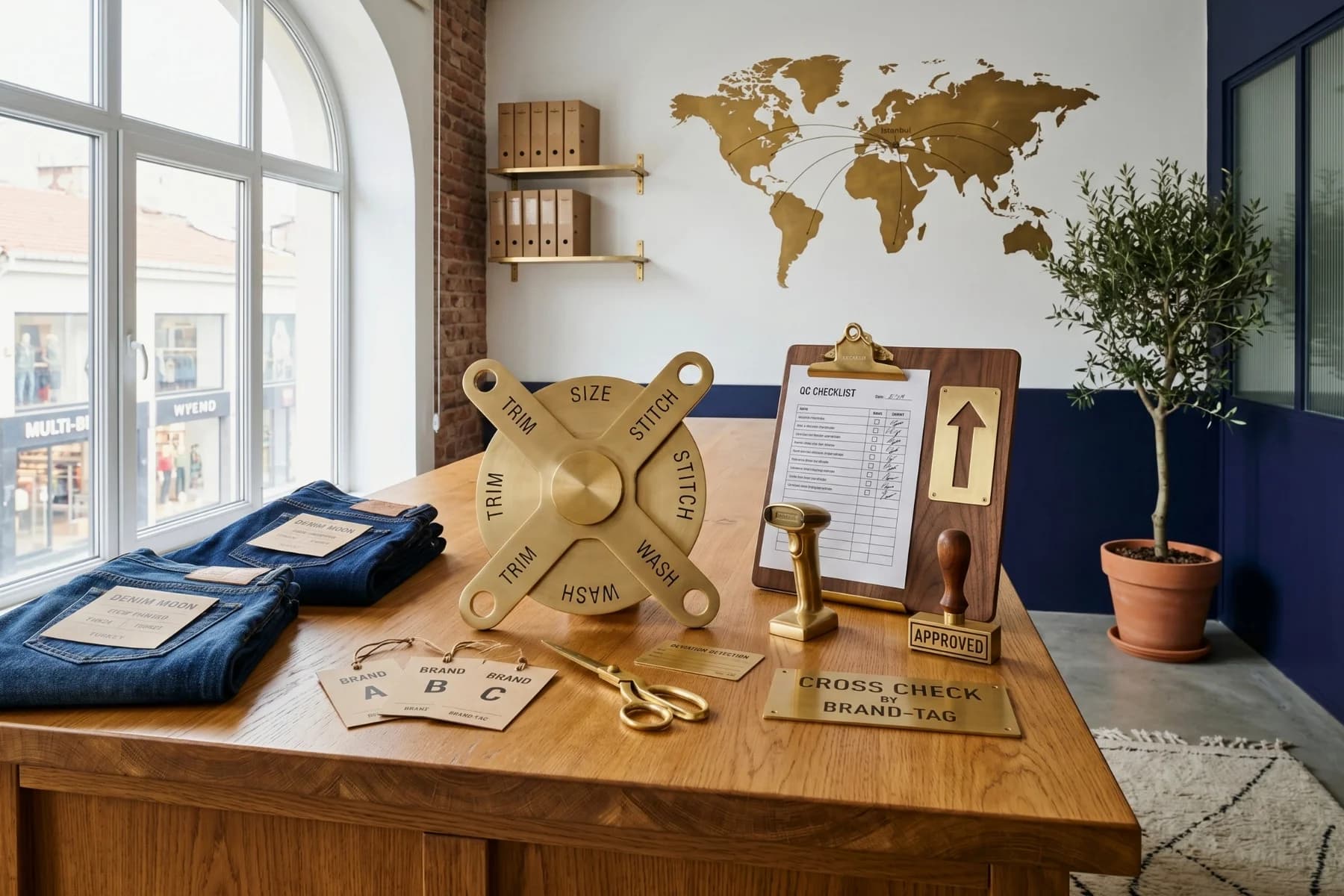
Filter QC scan systematically applies each brand's quality threshold; size match, stitching quality, wash tone and trim control are cross-evaluated against the brand-tag file. Products with detected drift enter the rework path.

Packing tag step ties each product to its owning brand at label level; polybag print, hangtag print, lot prefix label and master carton band are verified against the brand-tag file. Brand mix-up on cartons is filtered before dispatch.

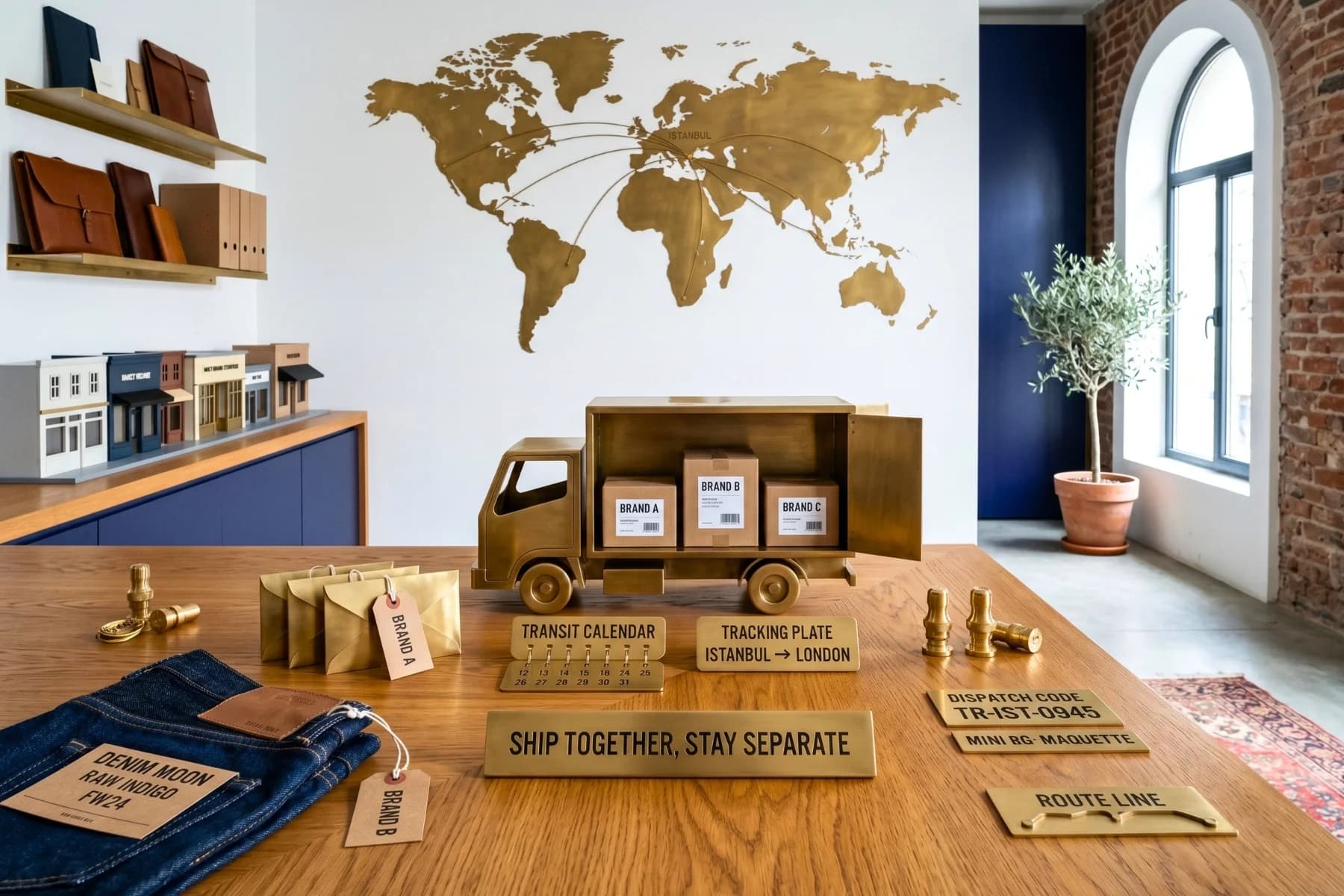
Parallel logistics systematically manages multiple brands within one dispatch window; shipping plan, customs files, transit calendar and tracking code are prepared as separate packages per brand. Agent receives multi delivery from one ops.

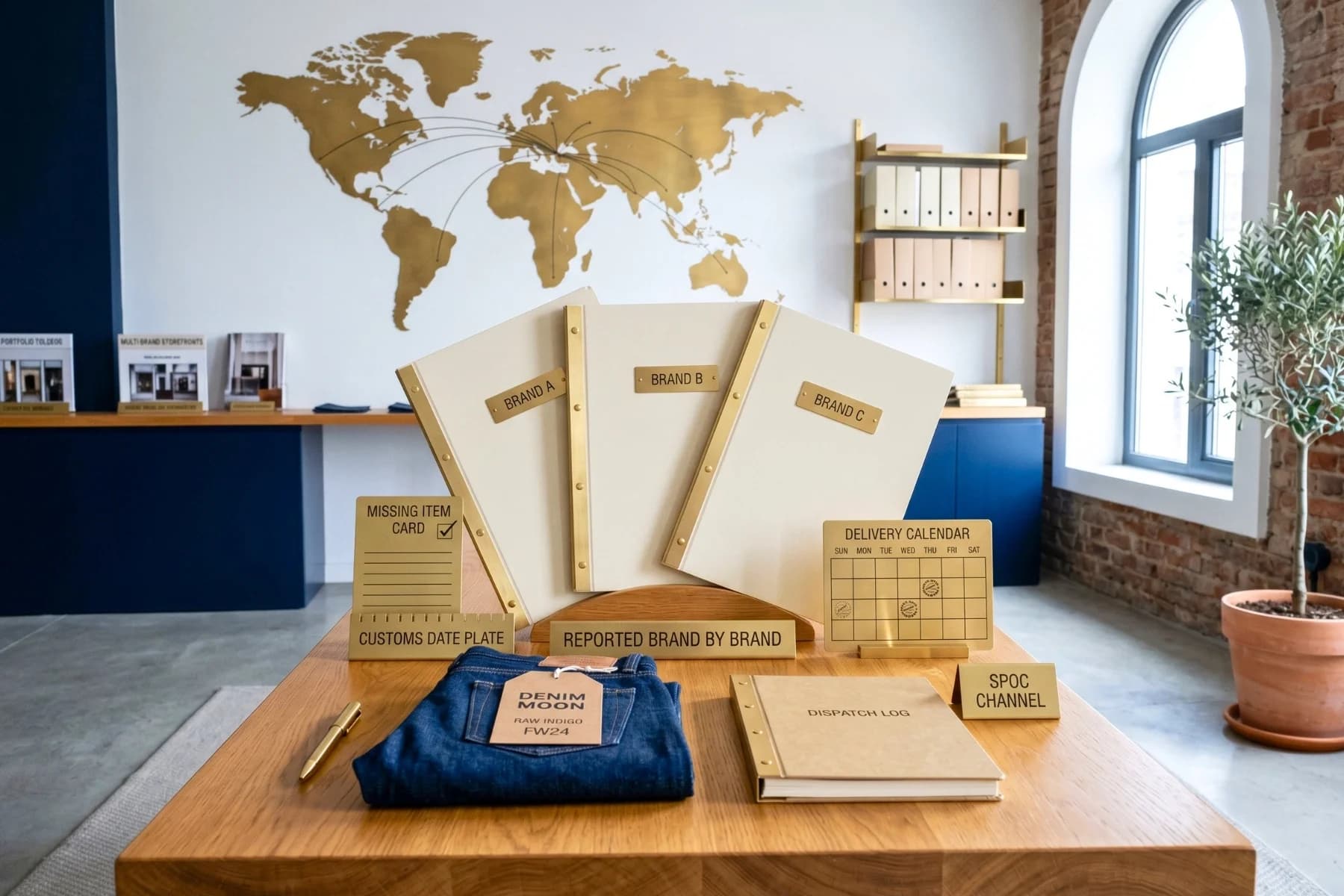
Panel report output delivers each brand's post-dispatch performance as a written package; production QC report, missing item list, customs date record and delivery calendar gather per brand. Agent forwards report to its customer.
Partnership structure models offer trade agent and distributor partners service discipline across three lanes; trade agent lane commission-based, buying office lane collection-based and distributor lane stock-based unite under one service.
Trade agent lane offers commission-based representation; one gate between producer and brand, with transparent file flow.
Buying office lane offers collection-based multi-brand aggregation; portfolio under one contract, shared annual calendar.
Distributor lane offers stock-based buy-and-sell model; buys, warehouses, resells, brings market-specific service set.
Mixed line rubs brand identities against each other in an agent portfolio and strains reputation; one line cannot carry multiple brands, brand traceability stays scattered. Brand-based structure runs each brand on an isolated lane.
Before the agent talk, three typical concerns of trade agent, buying office and distributor partners get clear answers so the talk goes productive; will brands mix, will identity erode, will multi-brand run in one atelier. One answer flows.
First concern is common; whether multi-brand portfolio mixes is a natural worry. Via brand-based isolation discipline, parallel line, lot prefix marking and master spec frame run each brand within its master file. Mix-up is prevented upfront.
Second concern is real; whether identity erodes in multi-brand setup is an important question. Trim card, wash recipe lock, pattern block fidelity and care label lane protect each brand's master signature. Brand character flows without drift.
Third concern is direct; whether one atelier runs multi-brand is a fair worry. Parallel order line, synchronous work calendar and cross-visibility panel make brands run in the same atelier frictionless. Capacity expands systematically.
Annual multi-portfolio scale shows production depth with agent and distributor partners through three numerical signals; produced SKUs prove portfolio width, active partners prove depth, brand-based dispatch packs prove variety.
Trade agents, buying offices and distributors with multi-brand portfolios share brand-based isolation, parallel order line and panel report experience first-hand; trim card, lot prefix and master spec turn into living testimony.
[İstanbul merkezli bir satın alma ofisi]
Buying Office & Distributor
“Raporlama düzeni ve kalite tutarlılığı profesyonel standartlarda.”
1-2
In thirty minutes, your multi-brand portfolio for agent, buying office and distributor is discussed on three axes—brand-based isolation, parallel order and panel report; a one-page first portfolio map is delivered as a written package.
Select a form to display here.
Partners taking the first step are also the start of the same discipline for us; let's discuss our structure, open the first collection path together.
Explore Our Structure